

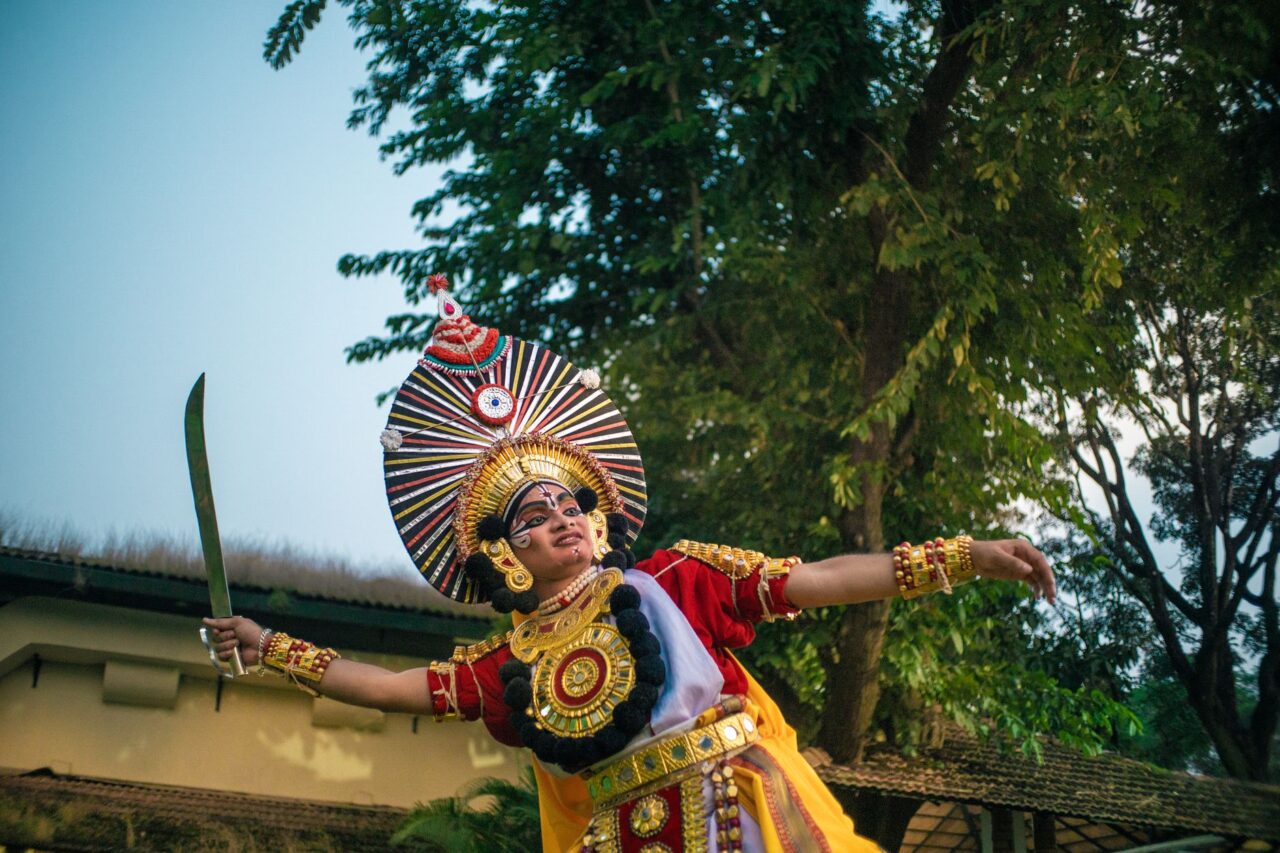
Chinese Sword Dance Performance in Singapore
A traditional jian sword routine sized to your stage, your run time and your Chinese New Year or gala programme.
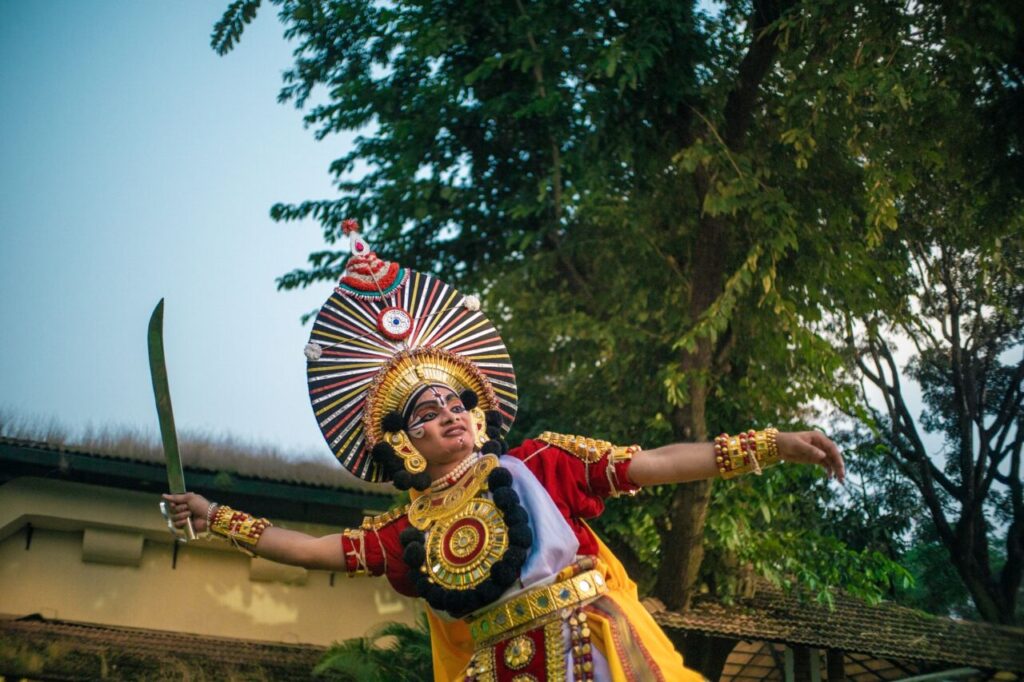
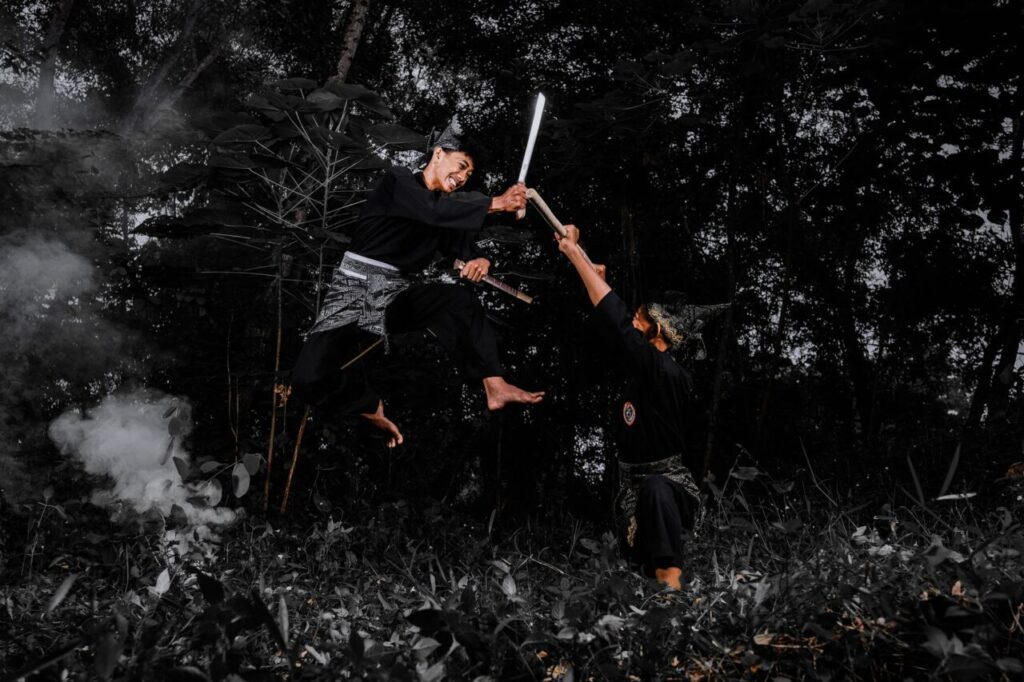
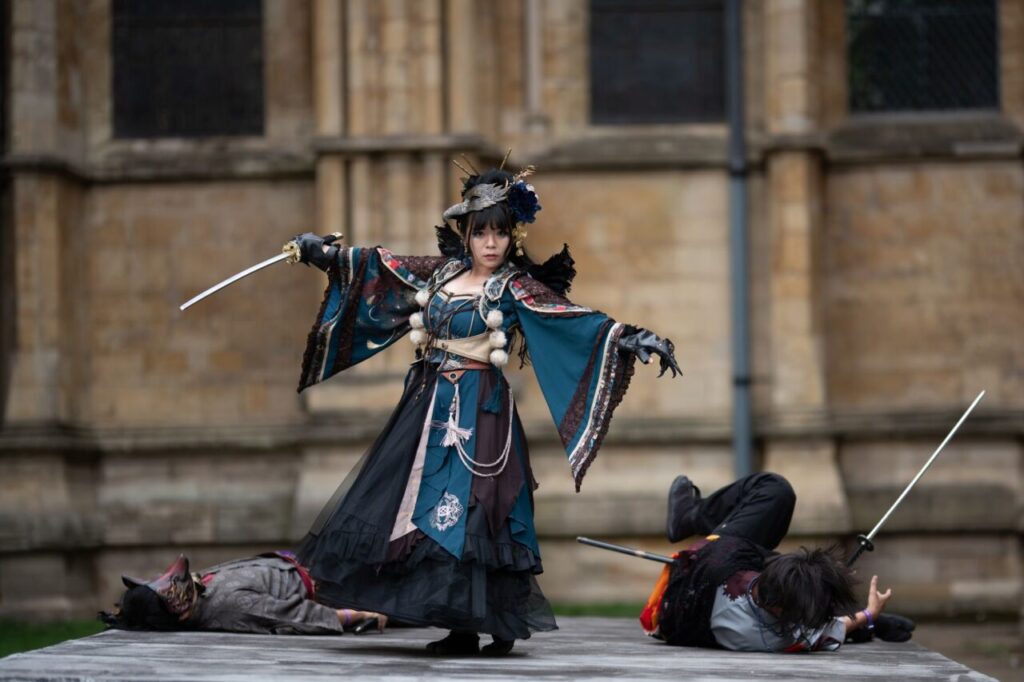
A Chinese sword dance performance in Singapore usually runs 3 to 8 minutes per piece, performed solo, in pairs, or as a group of 4 to 8 dancers using practice swords choreographed to traditional or fusion music. It suits Chinese New Year dinners, corporate galas, product launches and wedding tea ceremonies. Price depends on dancer count, run time, costume changes and whether the date falls in peak CNY season. Bookings for CNY typically need to be locked in 4 to 8 weeks ahead because dancer availability tightens fast in that window.
What is a Chinese sword dance performance
The Chinese sword dance is a solo or group routine built around the jian, a straight double-edged sword used in wushu and traditional Chinese dance. The choreography borrows its flowing arcs, spins and sword flourishes from wushu training but is slowed and shaped for stage presentation rather than combat. Dancers usually perform in silk costumes or wushu-style uniforms, sometimes in red and gold for Chinese New Year, sometimes in more muted Hanfu-inspired designs for weddings or gala dinners.
Most agencies in Singapore use practice swords rather than sharpened blades. They carry the same weight and balance so the choreography reads correctly from the audience, but they are not edged for cutting. This matters for venue risk assessments, which we cover further down.
The music can go two ways. A traditional route uses guzheng, erhu or classical Chinese orchestral pieces. A fusion route blends traditional instrumentation with modern percussion or electronic elements, which works well for corporate stages that want something recognisably Chinese but not purely ceremonial. Tell your agency which direction fits your audience before choreography is locked, because the two styles use different pacing.
2. FormatsFormats, dancer counts and set lengths
A single dancer piece runs shorter and tighter than a group piece, and most clients book based on how much stage time the programme actually has rather than what looks most impressive on paper. A solo routine with one sword gives a clean, intimate performance that works well for a small stage or a tight programme slot. A duo adds mirrored choreography and some partner lifts or sword exchanges, which reads better on a wider stage. A group of 4 to 8 dancers gives formation changes and synchronised sword work, which is what most people picture when they think of a Chinese New Year stage show, but it needs real floor space to land properly.
| Format | Dancers | Typical duration | Best for | Minimum floor space |
|---|---|---|---|---|
| Solo | 1 | 3 to 4 minutes | Welcome segment, small stage, cocktail reception | About 3m x 3m |
| Duo | 2 | 4 to 5 minutes | Gala opener, wedding tea ceremony add-on | About 4m x 4m |
| Group | 4 to 8 | 5 to 8 minutes | CNY dinner, product launch, grand opening | 5m x 5m or more |
Most bookings ask for one piece plus a short encore, usually with a costume or prop change in between. If your event has a countdown moment, a lion dance segment or a toast, ask whether the sword piece can be timed around it rather than scheduled as a stand-alone slot. This is a programming decision, not a dance one, and it is worth raising with your event planner before the run sheet is finalised.
3. Where it fitsWhich events suit a Chinese sword dance performance
Chinese New Year functions are the obvious fit, and for good reason. A sword dance gives a CNY dinner a moment of visual spectacle that a lion dance alone does not provide, and it pairs naturally with red and gold staging. But the act is not limited to CNY. Corporate galas use it as an opening number to signal a cultural theme without defaulting to a lion dance, which some clients feel is overused. Product launches with a China market angle use it to anchor the brand story. Weddings with a Chinese tea ceremony sometimes add a short duo piece between the ceremony and the reception as a palate-cleansing moment for guests.
Multicultural events, including National Day functions and heritage festivals, often book a sword dance alongside other cultural acts to represent Chinese heritage within a wider programme. If your event is building a multicultural segment, our cultural dance Singapore page has other acts commonly paired on the same bill, and our bhangra dancers and dhol players are a frequent pairing on multicultural run sheets.
4. LogisticsSpace, power and safety requirements
Floor surface matters more than most clients expect. Spins and sword arcs need a hard, non-slip floor. Carpet slows the dancers down and increases fall risk, especially for the larger group formations. If your venue is carpeted, ask whether a portable dance floor or marley sheet can be laid down, and confirm who is supplying it before the booking is confirmed.
Power needs are usually modest if the venue has an in-house PA system the dancers can plug a music source into. If there is no in-house sound, the agency can bring a portable speaker, but confirm this in advance so nobody turns up without amplified music on the day.
On swords specifically: because the props are swords, even blunted practice swords, many venues ask for a risk assessment, a prop declaration, or proof of insurance before the performance is approved, particularly in hotel ballrooms and government-linked venues. This is a venue requirement, not a dance requirement, so confirm it directly with your venue's events or security team rather than assuming the agency's standard paperwork will cover it. A reputable agency should be able to supply a risk assessment document on request, but you need to ask early, not the week of the event.
A green room or screened area for costume changes is needed if the act includes a costume swap between pieces. Allow at least 10 to 15 minutes for this if the programme has back-to-back acts.
The most expensive mistake: booking swords without checking the venue's prop policy
The single costliest error is confirming a group sword dance, paying a deposit, and only then finding out the venue requires a formal risk assessment or insurance certificate that takes days to arrange. In the worst case this forces a last-minute act substitution, which can mean losing the deposit on the original act and paying a rush fee for a replacement. Ask your venue about its prop and weapon policy before you confirm the booking, not after.
What drives the price
There is no fixed market rate for a Chinese sword dance performance in Singapore, and any agency quoting a flat number without asking about your event is skipping steps. The quote is built from several variables, and understanding them helps you compare quotes properly rather than just comparing a bottom-line figure.
- Dancer count. A solo act costs less than a group of 6 to 8, simply on headcount and rehearsal time for formations.
- Run time. A 3-minute solo and an 8-minute group piece with an encore are different jobs, not the same job at different lengths.
- Costume changes. Multiple costumes for a multi-segment programme add wardrobe and changeover cost.
- Custom choreography. A fusion piece built around your brand's music or theme costs more than a standard traditional routine already in the dancers' repertoire.
- Date and season. Chinese New Year week and the days immediately around it are the highest-demand period of the year for this act, and quotes in that window tend to sit higher than the rest of the year.
- Venue and travel. Venues outside the central business district, or events requiring an early load-in, may carry a travel or time premium.
Ask for a written quote that breaks these line items out rather than a single number, so you can see what you are actually paying for and where you might trim cost if the budget is tight. The act type page on our site shows how sword dance pricing compares against other cultural and dance acts we supply, which is useful if you are weighing options within a fixed budget.
6. ProcessHow booking works, step by step
Booking a Chinese sword dance performance follows a fairly standard sequence, but skipping a step usually shows up as a problem on event day.
- Enquiry and date check. You share the event date, venue, audience size and rough programme slot. The agency checks dancer availability, which matters most during CNY.
- Brief. You confirm the theme (traditional CNY, fusion, wedding, corporate), preferred duration, and whether the piece needs to be synced to any other moment in the run sheet.
- Quote. A written quote covering dancer count, duration, costumes, and any travel or season premium.
- Confirmation and deposit. A deposit secures the date. Terms for cancellation and rescheduling should be set out clearly; check our terms and conditions for how this is structured.
- Technical rider. The agency sends the venue a short document covering floor, sound and prop requirements, so the venue's events team can approve props in advance.
- Rehearsal and soundcheck. On the day, dancers usually need a short soundcheck and a walk-through of the stage before doors open.
- Performance. The act runs at the agreed point in the programme, with an encore if one was booked.
If you are planning a full event and not just one act, our event type page covers how a sword dance slots into different event formats, from corporate dinners to product launches.
7. CompareChinese sword dance vs other cultural dance acts
Clients booking a Chinese sword dance sometimes ask how it compares to a fan dance or a lion dance, since all three get requested for the same CNY slot. A fan dance is softer and more flowing, built around silk fans rather than props with any weapon association, and it reads as more decorative than dramatic. A lion dance is a different discipline entirely, built around acrobatics and percussion rather than individual choreography, and it usually needs its own technical rider for the lion heads and drums. A sword dance sits between the two: more visually dramatic than a fan dance, but more tightly choreographed and less acrobatic than a lion dance.
If your programme already has a lion dance and you want a second cultural moment without repeating the same energy, a sword dance is usually the better pairing than a second fan dance, because the pacing and visual language are different enough to hold audience attention. Our dancers in Singapore page lists the full range of acts we supply if you are building a multi-act programme and comparing options.
Frequently asked questions
How long is a typical Chinese sword dance performance?
A solo piece usually runs 3 to 4 minutes, a duo 4 to 5 minutes, and a group piece with 4 to 8 dancers runs 5 to 8 minutes. Many clients add a short encore of 1 to 2 minutes after a costume or prop change. Confirm your preferred length with the agency during the brief so the choreography and music are cut to that exact time, not left open-ended.
How much does it cost to hire a Chinese sword dance performance in Singapore?
There is no fixed rate. Price depends on dancer count, run time, number of costume changes, whether custom choreography is needed, and whether the date falls during Chinese New Year, the peak demand period. Ask for a written quote broken down by these line items rather than a single flat figure, so you can see exactly what you are paying for.
Do Chinese sword dance performers use real swords?
Most agencies in Singapore use practice swords, which match the weight and balance of a real jian but are not sharpened for cutting. Even so, many venues treat swords as props requiring a risk assessment or insurance declaration before approval. Confirm your venue's specific prop policy directly with their events or security team before the booking is finalised.
Can the performance be customised for Chinese New Year?
Yes. Most sword dance routines offered for CNY use red and gold costuming and traditional music, and some agencies offer a fusion option blending traditional instrumentation with modern percussion for a corporate stage. Tell the agency your event theme and audience during the initial brief so the costume and music choices are set before choreography is finalised.
How much space does a Chinese sword dance need?
A solo act needs roughly 3m by 3m of clear, non-slip floor. A duo needs about 4m by 4m. A group of 4 to 8 dancers typically needs 5m by 5m or more to perform formation changes safely. Carpeted venues usually need a portable dance floor or marley sheet, which should be arranged ahead of the event, not discovered on the day.
How far in advance should I book for Chinese New Year?
Chinese New Year week is the highest-demand period of the year for this act, and dancer availability tightens quickly in the weeks before it. Most agencies recommend confirming your booking 4 to 8 weeks ahead of the CNY period, and earlier still if you need a specific group size or a custom fusion routine built around your event theme.
Can a sword dance be combined with a lion dance on the same programme?
Yes, the two acts are commonly paired on the same CNY run sheet because they offer different energy and pacing. A lion dance is percussive and acrobatic, while a sword dance is more tightly choreographed and visually dramatic. Each needs its own technical rider, so confirm floor space and timing for both separately with your agency and venue.
What is the difference between a sword dance and a fan dance?
A fan dance uses silk fans and flowing, decorative movement, with no weapon association. A sword dance uses a jian and reads as more visually dramatic, with tighter, faster choreography drawing on wushu technique. Clients booking both a lion dance and a second cultural act for the same event often choose a sword dance over a second fan dance for contrast in pacing and energy.
Ready to add a Chinese sword dance to your programme
Tell us your date, venue and audience size, and we will confirm availability and send a written quote.
Get a Free Quote