


Motivational and Keynote Speakers for Events in Singapore
Book a speaker who fits your audience and your stage, not just a name that looked good on a shortlist.

Published 6 October 2026 · 9 min read · Bella Entertainment Singapore
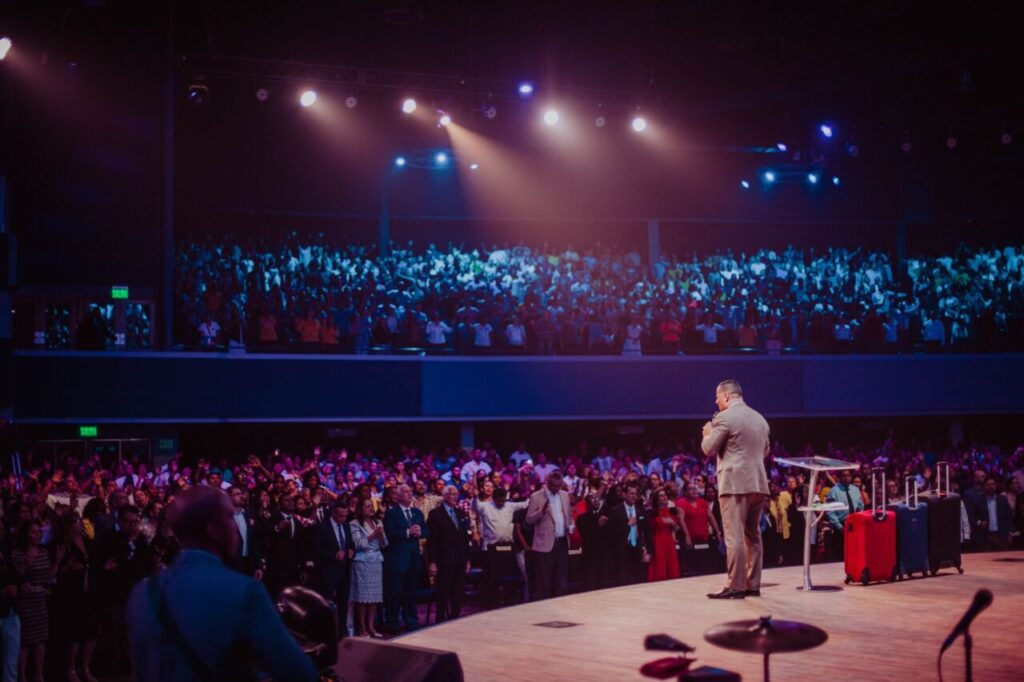
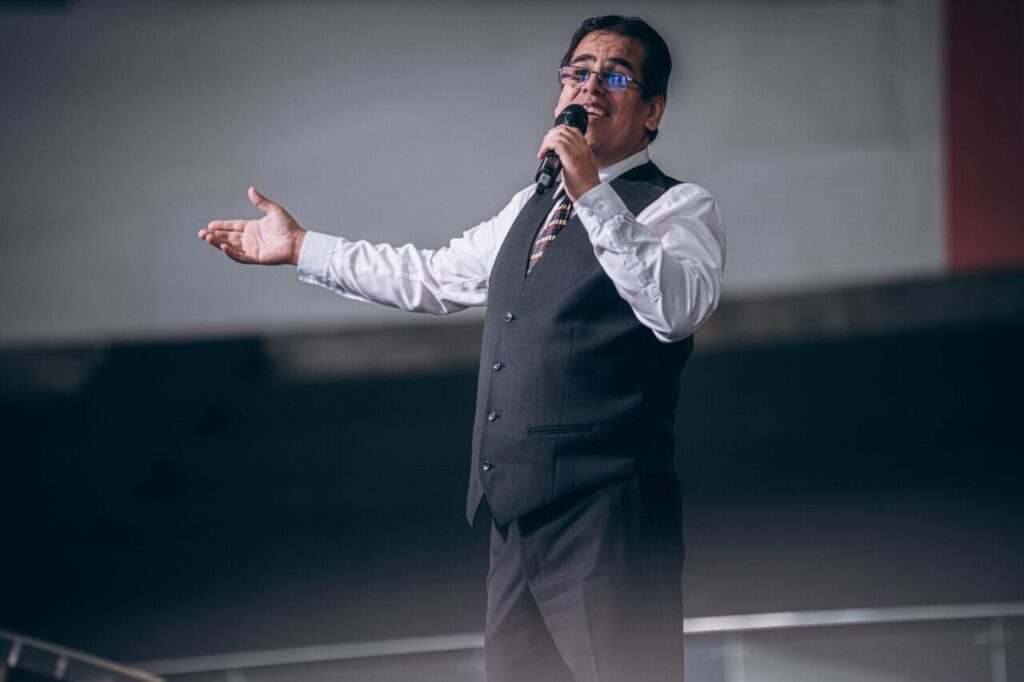
A motivational or keynote speaker in Singapore is booked through an entertainment or speaker agency for a single segment, usually 20 to 60 minutes, at a conference, corporate dinner, town hall or sales kickoff. Fees vary widely and are driven by the speaker's profile, whether they fly in from overseas, exclusivity terms and how much the content is customised to your company. Plan for 4 to 8 weeks' lead time, basic stage AV, and expect higher demand from November to January, the corporate dinner and dance season.
What a keynote or motivational speaker does at your event
The two labels overlap more than people expect. A keynote speaker is usually booked to open or close a conference and set the intellectual tone for the day, often with a point of view, a framework, or a body of research behind it. A motivational speaker is booked to move the room emotionally, around resilience, performance, sales drive, or culture change, often drawing on a personal story. In practice most events in Singapore want both in one person: someone with credibility and a story who can hold a ballroom of 200 to 2,000 people for 30 to 45 minutes without a single slide of filler.
Most bookings are for one segment of a larger event, not the whole show. That matters for planning. A speaker fits around an awards segment, a dinner, a product reveal or a performance from a dance or cultural act, so the running order and the handoffs need to be planned with the rest of the programme, not treated as a separate booking.
Formats and set lengths
Set length is decided by where the speaker sits in your programme, not by preference. An opening keynote that sets the theme for a multi-day conference runs shorter than a signature talk booked as the single centrepiece of a gala or sales kickoff.
| Format | Typical length | Best for |
|---|---|---|
| Opening keynote | 20 to 30 minutes | Conference kickoff, setting the day's theme |
| Signature keynote | 45 to 60 minutes | Sales kickoff, leadership offsite, convention centrepiece |
| Fireside chat or panel | 30 to 45 minutes | Smaller audience, Q&A-heavy format |
| Workshop or masterclass | Half day, 3 to 4 hours | Skill building, smaller breakout groups |
| After-dinner talk | 15 to 25 minutes | Dinner and dance, award night, lighter tone |
These are typical ranges, not fixed rules. A speaker with a long-form story sometimes needs the full 45 minutes to land the arc properly, and cutting it to 20 minutes for the sake of the agenda can flatten the whole talk. Tell the agency the honest time you can give and let the speaker's team tell you what is achievable in it.
Which events this suits
Motivational and keynote speakers in Singapore are booked most often for corporate conferences, sales kickoffs, town halls and AGMs, annual dinner and dance events, association conventions, and leadership offsites. Association conventions held at the larger convention spaces around Marina Bay and Suntec typically want a credentialed industry keynote rather than a purely motivational one, while a company's internal D&D or year-end party usually wants something lighter, funnier and more personal.
Town halls and AGMs have their own constraint: the audience already knows the company's numbers and politics, so a generic inspirational talk falls flat fast. These briefs need a speaker willing to take a short call with HR or the comms lead beforehand to understand what the room actually needs to hear.
Many of our clients book a keynote segment alongside a performance act on the same night, for instance a cultural dance opener before the speaker, or a dance finale after. If you are planning a gala dinner with both a speech and a show, it helps to brief the agency on the full programme so the two segments do not compete for the same emotional beat. See our cultural dance Singapore page or event type page for how these segments are usually sequenced.
Space, power and technical requirements
A speaker segment needs less equipment than a performance act but what it needs, it needs to work perfectly, because there is nowhere to hide a dead microphone.
- Microphone: a headset or lapel mic, not a handheld, since most speakers move and gesture. Confirm a spare battery pack and a backup mic are on hand.
- Staging: a stage or raised platform with clear sightlines, usually smaller than what a dance act needs, often just a lectern-free open space.
- Confidence monitor: for longer keynotes with slides, a floor monitor facing the speaker is standard so they are not turning their back to the room to check the screen.
- Clicker: a wireless presentation remote, tested before doors open, not handed over five minutes before the talk.
- Projection or LED wall: for slide-based talks, confirm aspect ratio and file format with the venue's AV team at least a week out.
- Green room: a quiet holding space near the stage, especially for speakers going straight from arrival into a talk.
- Soundcheck time: 15 to 30 minutes before doors, non-negotiable for any speaker using slides or video inserts.
Venue AV teams at the larger convention and hotel ballroom spaces in Singapore generally handle this well, but house systems vary a lot between properties. Confirm the technical rider directly with the venue once the room is booked, not after.
What drives the price
There is no single rate card for motivational speakers in Singapore because the fee moves on several independent factors, not on speech length alone. Two speakers doing the same 30-minute slot can sit far apart in price once you account for who they are and what the booking demands of them.
| Factor | Why it moves the fee |
|---|---|
| Speaker profile | Published authors, TV personalities and industry names command more than first-time or emerging speakers |
| Local versus flown in | Overseas speakers add flights, hotel nights and per diem on top of the speaking fee |
| Exclusivity | A clause barring the speaker from a competing event in the same week or industry raises the fee |
| Content customisation | A research call and a deck built around your company's situation costs more than a stock talk |
| Language | Bilingual delivery or live translation into Mandarin, Malay or Tamil adds cost and planning time |
| Season | November to January, the dinner and dance season, and major convention months carry a premium through scarcity |
| Notice period | Bookings inside 4 weeks often carry a rush surcharge if the speaker can fit you in at all |
Ask the agency for a fee band once you share your date, expected audience size, format and whether the speaker needs to fly in. Pricing without those details is a guess, and a confident number given before anyone knows your date should be treated with suspicion.
How booking works
- Brief the agency: event date, audience size, industry, objective of the talk, budget range and preferred format.
- Shortlist review: the agency sends two to four speaker profiles with reels, past topics and an indicative fee band.
- Hold the date: once you pick a speaker, the agency places a tentative hold while contract terms are confirmed.
- Contract and deposit: fee, scope, exclusivity terms and cancellation terms are set out and signed, usually with a deposit to confirm.
- Content call: a briefing call between the speaker's team and your event or comms lead, so the talk reflects your company and audience, not a generic deck.
- Technical rider confirmed: AV needs locked in with the venue, usually one to two weeks before the event.
- Soundcheck and delivery: arrival, soundcheck, green room time, then the talk itself.
For most corporate bookings this whole process runs comfortably within 4 to 8 weeks. Larger international names or peak-season dates need more runway, sometimes two to three months, simply because their calendars fill early.
Local versus international speakers
Singapore's corporate audience is multilingual and multicultural, so language fit matters more here than in many other markets. A Singapore-based speaker can usually deliver comfortably in English and often switch register for a mixed English and Mandarin or Malay audience without needing live translation. An international speaker flown in for one engagement almost always presents in English only, so if your audience needs another language covered, plan for a translator or a bilingual co-presenter.
Foreign speakers coming in for a single short talk may fall under a work pass exemption for short-term speaking engagements under Ministry of Manpower rules, but these rules change and the thresholds are specific, so confirm the current position directly with MOM or your corporate secretary before relying on it. Do not assume a verbal arrangement covers it.
Virtual and hybrid delivery is also common for speakers based overseas who cannot travel for a short engagement. This solves the visa question entirely but loses the audience energy of a live stage presence, which matters more for a motivational talk than for a data-heavy keynote.
The most expensive mistake
Booking a big-name speaker late in the November to January dinner and dance season, then either paying a steep rush premium to secure them or settling for whoever is still free. The second cost is worse than the first: a mismatched speaker who never got a proper briefing call delivers a generic talk that the whole room forgets by the following week, which means the entire fee bought nothing. Lock the date and the content briefing call at least 6 to 8 weeks out if your event falls in peak season.
Frequently asked questions
How much does a motivational speaker cost in Singapore?
There is no fixed rate because the fee depends on the speaker's profile, whether they fly in from overseas, exclusivity terms, content customisation and the season you book in. Share your date, audience size and format with the agency and ask for a fee band specific to your event rather than relying on a generic published rate.
How far in advance should I book a keynote speaker?
Most corporate bookings in Singapore are confirmed 4 to 8 weeks ahead. Larger international names or dates falling in the November to January dinner and dance season need more lead time, often 2 to 3 months, because calendars fill early during peak season.
What is the difference between a motivational speaker and a keynote speaker?
A keynote speaker is typically booked to set the intellectual tone of a conference, often around a framework or research. A motivational speaker aims to move the audience emotionally, often through a personal story. In Singapore most bookings want both qualities in one speaker, since a pure data talk or a pure inspiration talk rarely holds a corporate room alone.
Can speakers present in Mandarin or Malay?
Singapore-based speakers can often present comfortably in English with Mandarin or Malay mixed in for a local audience. Speakers flown in from overseas usually present in English only, so if part of your audience needs another language, plan for a translator or a bilingual co-host rather than assuming the speaker can cover it.
Do foreign keynote speakers need a work pass in Singapore?
Short single-day speaking engagements by foreign speakers may qualify for a work pass exemption under Ministry of Manpower rules, but the exact conditions change and are specific to the engagement. Confirm the current position directly with MOM or your company's corporate secretary before the booking is finalised, rather than assuming it is covered.
How long is a typical keynote speech?
Most corporate keynotes in Singapore run 20 to 30 minutes as a conference opener, or 45 to 60 minutes as the centrepiece of an event such as a sales kickoff or gala. After-dinner talks at dinner and dance events are usually shorter, around 15 to 25 minutes.
Can a motivational speaker be combined with entertainment acts at the same event?
Yes, this is common for galas and dinner and dance events, where a speaker segment sits alongside a performance act such as a dance opener or finale. Brief the agency on the full programme so the two segments are sequenced properly and do not compete for the same emotional moment in the night.
What technical equipment does a speaker need on stage?
At minimum a headset or lapel microphone with a backup, a raised stage with clear sightlines, a wireless clicker for slides, and 15 to 30 minutes of soundcheck time before doors open. Longer keynotes with slides also need a confidence monitor so the speaker is not turning away from the audience to check the screen.
Ready to book a speaker for your event
Tell us your date, audience and objective and we will put together a shortlist that actually fits the room.
Get a Free Quote