

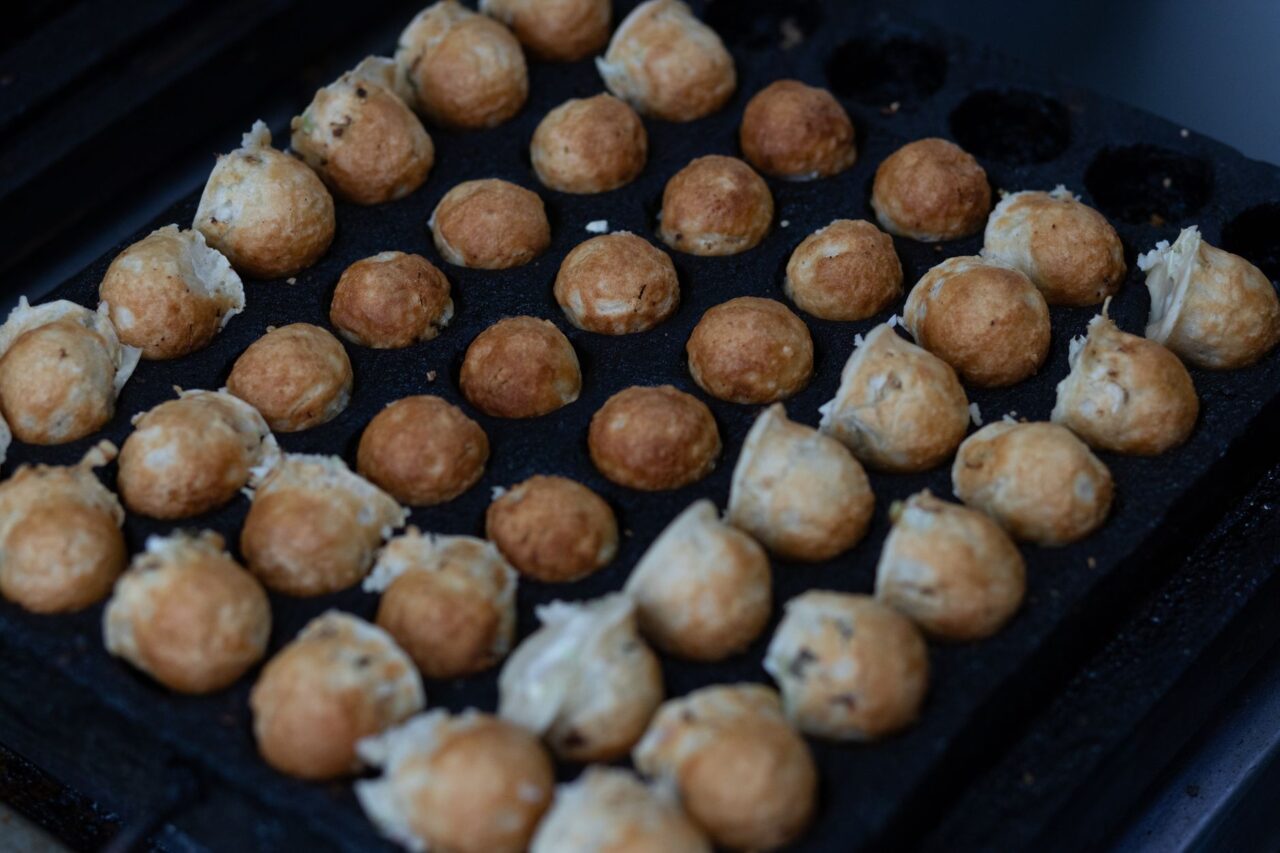
Takoyaki Live Station for Events in Singapore
A chef-manned takoyaki counter that cooks and serves the snack fresh in front of your guests, built for corporate parties, weddings and roadshows.
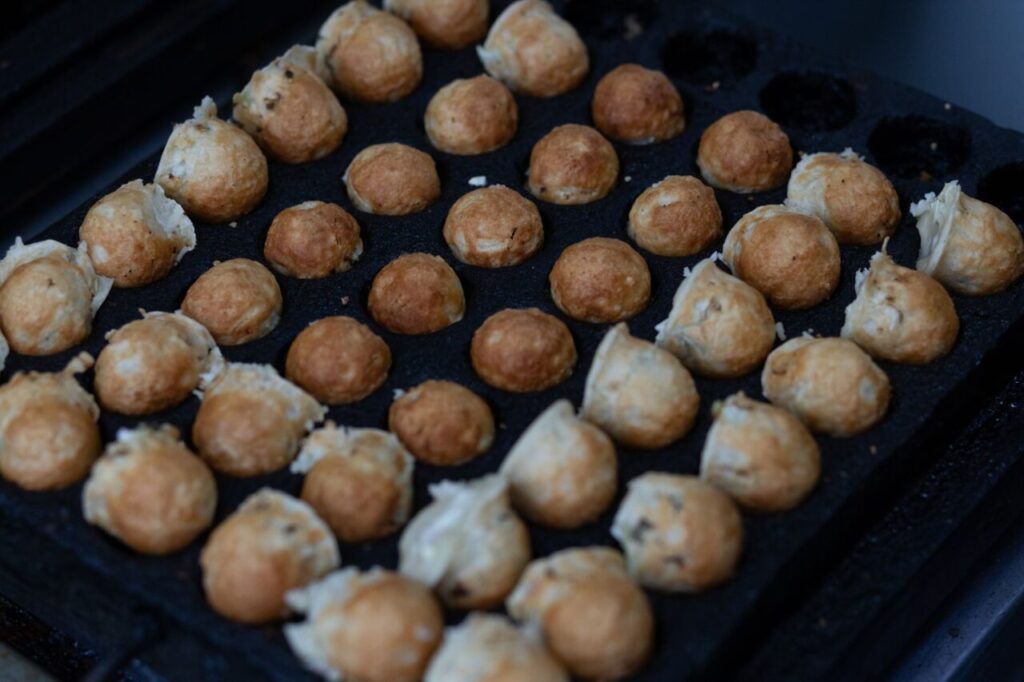
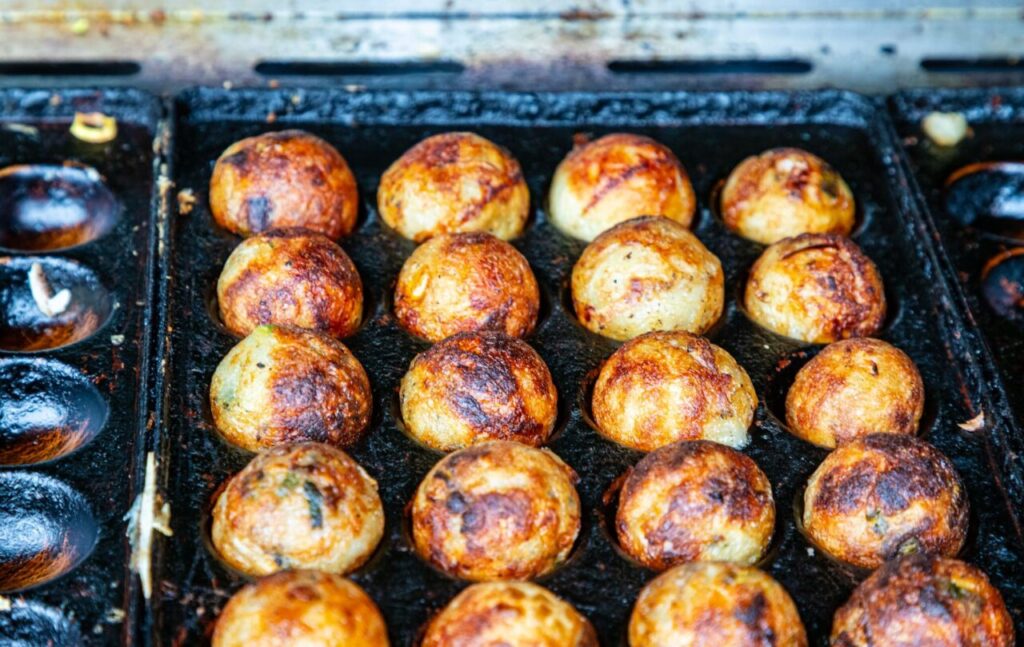
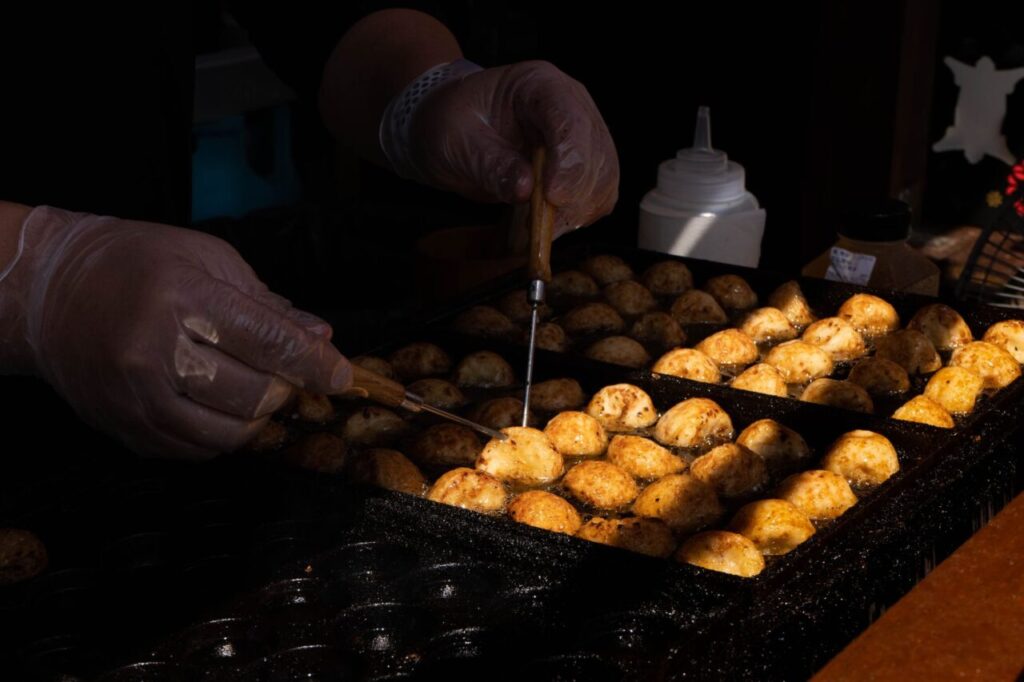
A takoyaki live station in Singapore is a manned counter where a cook grills the batter balls to order and hands them out hot, usually run as a snack or supper station alongside a buffet or cocktail menu. It needs one 13A power point per pan, roughly a 6 to 8 foot table footprint, and runs for a set service window, typically 1.5 to 3 hours. Pricing depends on headcount, duration, number of pans and attendants, and whether halal-certified or premium ingredients are requested. To go with the takoyaki, you can add a bubble tea live station for drinks.
What a takoyaki live station includes
A takoyaki live station in Singapore is built around the pan, not a plated dish. Batter goes into a hot cast-iron mould with small wells, a filling goes in, and the cook flips each ball with a pick until it is crisp outside and soft inside, then finishes it with sauce, mayo, bonito flakes and seaweed flakes in front of the guest. The theatre of the flip is most of the draw. It is closer to a teppanyaki counter than a buffet tray, and that is why clients book it as entertainment as much as food.
Most bookings here include the pan or pans, the cook, ingredients for the agreed headcount, serving cups or trays, and signage if requested. Standard fillings are octopus, with corn, cheese or sausage as common variations for guests who skip seafood. Your agency contact will confirm exactly what is bundled in your quote, because some venues want the station to also cover setup and breakdown labour, and some don't.
2. PricingTakoyaki live station pricing in Singapore
There is no fixed market rate for a takoyaki live station in Singapore because the cost moves with headcount, service duration, number of pans and the ingredients you pick. What we can give you is the structure of the quote, so you know what to compare when two vendors come back with different numbers.
| Factor | What it changes |
|---|---|
| Guest count | Sets the batter and filling volume, and whether one pan is enough or you need two running side by side |
| Service duration | Most stations are quoted per 1.5 to 3 hour block; running longer usually means an hourly add-on, not a flat doubling |
| Number of pans and cooks | A single pan with one cook suits a slower-paced snack table; a second pan cuts queue time for larger crowds |
| Ingredient tier | Classic octopus filling versus premium add-ons such as cheese, prawn or extra sauces shifts cost per piece |
| Halal certification | Halal-certified ingredients and a halal-trained cook usually sit at a different rate than a standard non-halal setup |
| Venue and timing | Outdoor setups, late-night slots, and venues with tight loading access can add logistics cost |
Ask for a quote broken down by these lines rather than a single lump sum. It is the only way to tell whether a cheaper quote is cheaper because it has less food, a shorter window, or genuinely better pricing.
The mistake that costs the most
Confirming a takoyaki live station before checking the venue's rules on live cooking and open heat. Some function rooms, malls and hotel spaces restrict naked flame or require the vendor to be on an approved list, and some require a fire permit or extra insurance for any cooking equipment on site. Clients who skip this step sometimes find out two days before the event that the station cannot run as planned, forcing a last-minute switch to a pre-cooked buffet version with none of the theatre they booked it for. Confirm power, heat source rules and vendor approval with your venue coordinator before you sign off on any live station, takoyaki included.
Which events suit a takoyaki live station
A takoyaki live station works best anywhere guests are mingling rather than seated for a formal course, which is most of the event types we get asked to staff it for in Singapore.
- Corporate parties and D&Ds as a late-night supper station or a themed food corner alongside other live stations
- Weddings as a supper snack during the reception, often paired with a Japanese or fusion theme
- Roadshows and mall activations where the live cooking draws foot traffic as much as the sample itself
- Birthday parties and private celebrations looking for something less expected than a standard dessert table
- School and community events where a food demo doubles as a short, family-friendly show
If your event already has a cultural or performance theme, a takoyaki station is easy to slot in without clashing. We often quote it alongside acts from our act type pages or dance groups browsed by event type, so the food, the entertainment and the setup are coordinated by one point of contact instead of three separate vendors.
Space, power and venue requirements
The physical footprint is small compared to most live stations, but the power draw is the detail that trips people up. A takoyaki pan is usually run off a standard 13A power point, and each additional pan needs its own point or a properly rated extension, not a shared adapter. Confirm this with your venue's technical team before the event, especially if the room already has other stations, lighting rigs or AV equipment drawing from the same circuit.
| Requirement | Typical need |
|---|---|
| Table footprint | A 6 to 8 foot table per pan, plus clearance behind for the cook |
| Power | One 13A point per pan, confirmed as a dedicated circuit where possible |
| Water or prep access | Not usually required on site if batter is pre-mixed and transported ready to cook |
| Ventilation | Light smoke and steam from the grill, better suited to open or well-ventilated spaces than sealed small rooms |
| Outdoor setup | Possible with shelter from rain and wind, and a generator if there's no mains power nearby |
If you are running the station outdoors or in a tented area, flag it early. Wind affects the gas or induction flame, rain affects the cook's working space, and a generator adds its own booking lead time, so this is not something to sort out the week of the event.
Halal, vegetarian and allergy options
Singapore's guest lists are mixed by default, so dietary flexibility is usually the first question we get asked, not the last. Halal-certified takoyaki is available and should be requested at the time of enquiry, since it affects both the ingredients and sometimes the cook assigned to your station. Vegetarian versions typically swap the octopus filling for corn, cheese or mushroom, keeping the batter and sauce base the same.
On allergies, be specific rather than general. Takoyaki batter contains wheat flour and egg as standard, the classic filling is seafood, and common toppings include bonito flakes, which some guests will not expect to be fish-derived. Tell your coordinator the actual allergens in your guest list, not just "some guests have allergies," so the kitchen can label or separate servings properly on the day.
How booking a takoyaki live station works
Booking follows roughly the same steps whether it's a 50-guest birthday or a 500-guest roadshow, the detail just scales up.
- Enquiry: share your date, venue, estimated headcount and rough service window
- Site check: we confirm power points, table space and whether the venue allows live cooking with open heat
- Quote: you receive a breakdown covering pans, cooks, ingredients and duration, with halal or dietary variations priced separately if needed
- Confirmation and deposit: standard across most live entertainment and food bookings in Singapore, with the balance due closer to the event
- Final headcount: usually locked in a set number of days before the event so ingredient quantities are accurate
- Event day: the team arrives early enough for setup, runs the agreed service window, then breaks down and clears the station
Lead time varies with the season. Weekday corporate bookings can sometimes be confirmed on shorter notice, but wedding season weekends and year-end company parties get booked out early, so treat the takoyaki station the same way you'd treat any other live act and lock it in as soon as the date and venue are confirmed. You can read more about how we plan multi-vendor events on our about us page, or browse other live acts and performers through dancers in Singapore if you're building a full entertainment lineup rather than a single station.
Frequently asked questions
How much does a takoyaki live station cost in Singapore?
There is no fixed rate. Price depends on guest count, service duration, number of pans and cooks, ingredient choices and whether halal certification is required. Ask for a quote broken down by these factors so you can compare vendors properly instead of comparing a single total figure.
How many pieces of takoyaki should we plan per guest?
This varies with the event format and how many other food stations are running. For a station treated as one of several snack points, planners usually budget a modest number of pieces per guest rather than a full meal portion. Confirm the exact count with your caterer or agency contact based on your guest list and menu.
Is halal takoyaki available for events in Singapore?
Yes, halal-certified takoyaki can be arranged, but it needs to be requested at the time of enquiry since it affects the ingredients sourced and sometimes the cook assigned. Confirm halal certification status directly with your vendor rather than assuming it by default, since not every station runs halal unless specified.
What power supply does a takoyaki station need?
Each pan typically runs off one standard 13A power point. Multiple pans need multiple points or a properly rated supply, not a shared adapter. Confirm this with the venue's technical team in advance, especially if other equipment is drawing from the same circuit in the room.
How much space does a takoyaki live station need at a venue?
A typical setup needs a 6 to 8 foot table per pan plus clearance behind it for the cook to work safely. Exact space requirements should be confirmed with the venue based on the final floor plan, especially if the station sits alongside other buffet or live cooking tables.
Can a takoyaki station be set up outdoors?
Yes, with shelter from rain and wind and, if there's no mains power nearby, a generator arranged in advance. Wind can affect the flame and rain can affect the cook's working space, so outdoor setups need to be flagged early rather than decided the week of the event.
Can vegetarian or non-seafood takoyaki be served?
Yes, the octopus filling is commonly swapped for corn, cheese or mushroom while keeping the same batter and sauce base. Request this when you book so the kitchen prepares the right proportion of vegetarian portions alongside the standard filling for the rest of your guest list.
How far in advance should we book a takoyaki live station?
Treat it like any other live entertainment booking in Singapore and confirm it as soon as your date and venue are set. Weekday corporate events sometimes have more flexibility, but weekend weddings and year-end company parties fill vendor calendars early, so late enquiries risk limited availability.
Add a takoyaki live station to your event
Tell us your date, venue and headcount and we'll put together a quote with the right pan count, attendants and dietary options.
Get a Free Quote