

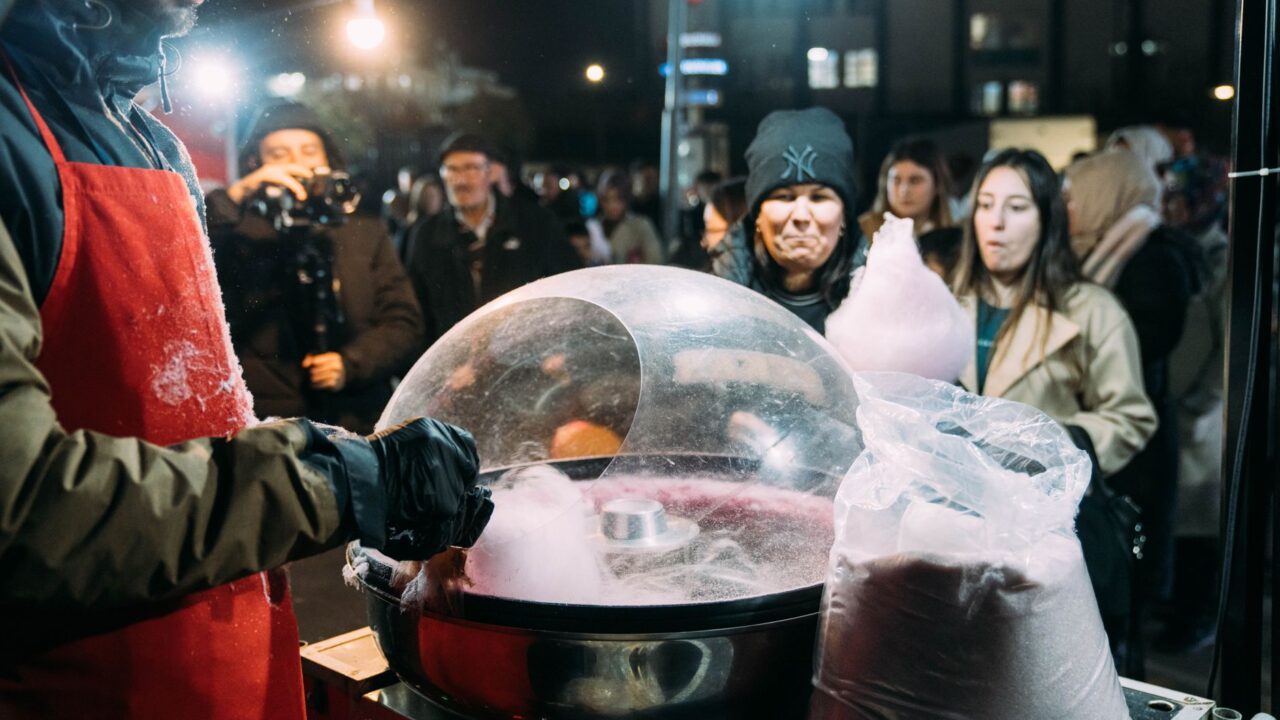
Traditional Candy Station for Events in Singapore
A staffed, old-school sweets stall that gives guests something to touch, pick and talk about, built around the candy most Singaporeans grew up with.
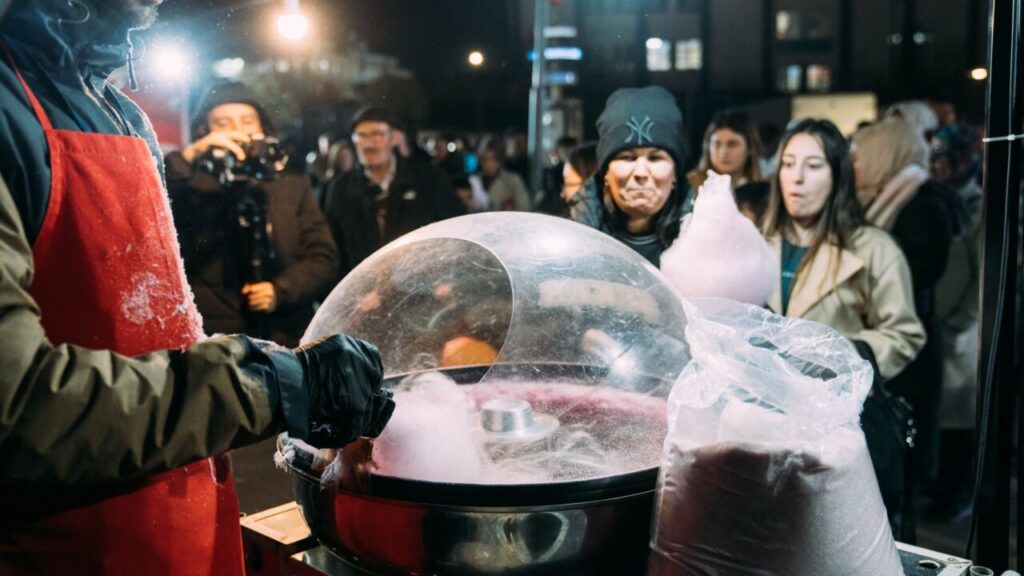
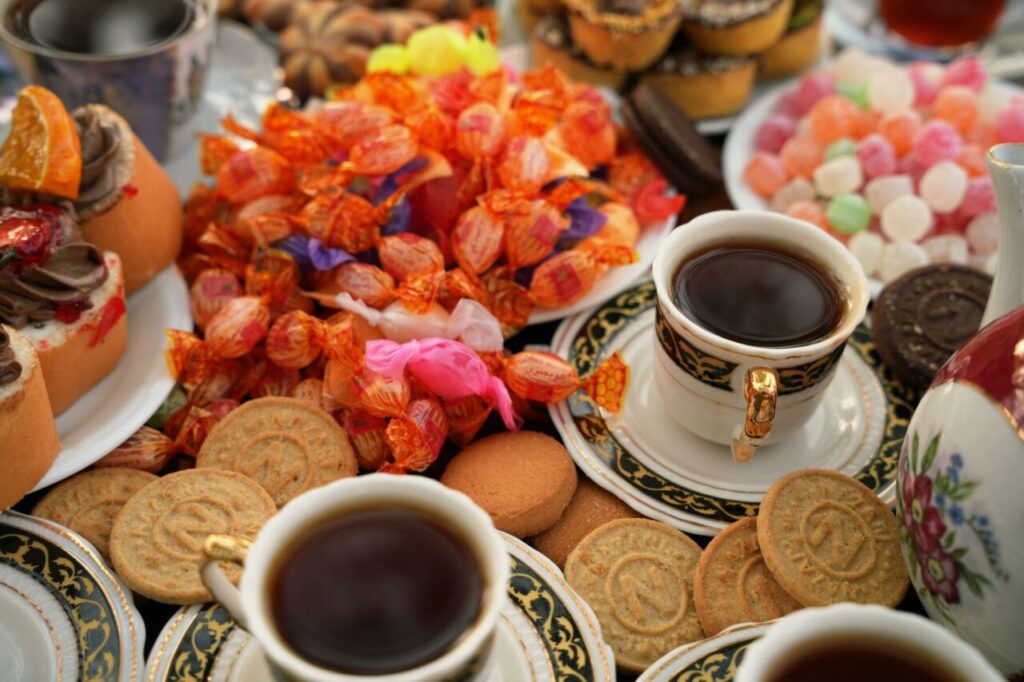

A traditional candy station is a staffed display of nostalgic local sweets, such as White Rabbit, Hacks, dried plums, haw flakes and old-school biscuits, set up at a wedding, corporate event or festival so guests can browse and help themselves. It usually comes as a tabletop stall or small cart with jars, scoops and bags, staffed by an attendant, and can be scaled up with a candy floss machine or traditional costume theming. Space, power and run time are the main things to confirm before booking.
What a traditional candy station actually is
A traditional candy station is not a dessert table. It is a themed, staffed pop-up stall built around retro sweets that trigger memory and conversation, the kind of candy sold at old provision shops and school tuck shops before vending machines took over. Think White Rabbit milk candy, Hacks, dried sour plums, haw flakes, kaya biscuits, Ding Dang, salted dried fruit, and jars of gula melaka sweets or rock sugar depending on the theme you ask for.
In Singapore it is usually booked as a themed activity sitting alongside a buffet or cocktail reception, not as the meal itself. Guests pick their own bags, weigh or scoop portions, and the attendant restocks and manages the queue. Some clients pair it with a traditional costume for the attendant, a hand-painted cart, or vintage signage to match a Peranakan, kampung or 1960s Singapore theme.
2. Where it fitsWhich events in Singapore suit a candy station
Weddings, corporate dinners with a heritage or nostalgia theme, Chinese New Year and Hari Raya open houses, National Day celebrations, school carnivals and retirement parties book this most often. It works because it gives guests something to do during the gap between arrival and the formal programme, which is usually the weakest part of any event timeline.
It also pairs naturally with cultural performances. A candy station next to a cultural dance set, or alongside bhangra dancers and dhol players at a festival event, gives guests a reason to linger in the same area rather than drifting to the bar. If your event has a specific cultural angle, Malay, Peranakan, Chinese or Indian, it is worth checking the candy mix can be adjusted to match, since not every sweet in a generic candy buffet reads as "traditional" to every audience.
It does not suit every format. A seated formal dinner with a tight run of show has nowhere for a browsing station to live. If your event is heavily programmed minute to minute, a candy station works better during pre-dinner drinks or an intermission than in the main room.
3. OptionsFormats and station sizes
Most suppliers in Singapore offer three rough sizes. The right one depends on guest count and how long the station needs to stay stocked, not on budget alone, since a small station for 300 guests will run empty fast and a large station for 40 guests looks half-dressed.
| Format | Typical guest count | Footprint | Attendant |
|---|---|---|---|
| Compact tabletop stall | Up to around 80 guests | One standard table, roughly 1.5m wide | Optional, often self-serve with signage |
| Standard station | Around 80 to 250 guests | One to two tables plus backdrop or cart, 2m to 3m wide | Usually one attendant for restocking and bagging |
| Large or themed cart | 250 guests and above, or long run times | Full cart or multi-table spread, 3m or more | One to two attendants, costume theming common |
Confirm the exact table count and backdrop size with the organiser's floor plan, because the figures above are general and every venue's layout is different.
Space, power and setup requirements
A standard station needs a flat, stable surface, roughly 2 to 3 metres of frontage, and clear access for the attendant to restock from behind. If you are adding a candy floss machine, you need a dedicated 13A power point within a few metres, since extension reels across a walkway are a safety issue most venues will flag on the day.
Setup typically takes 30 to 45 minutes for a standard station and longer for a themed cart with backdrop and lighting. Most agencies ask for load-in access at least an hour before guest arrival, and a teardown window immediately after the event or at a set time agreed in advance. If the venue has strict loading bay hours, lift access limits or a no-trolley policy, flag this when you book, not on the day.
Outdoor events need extra thought. Candy melts, bags blow around in wind, and jars in direct sun get hot to the touch. Ask for a shaded or tented position if the event is outdoors, and confirm whether the supplier brings weighted signage for breezy locations.
5. CostWhat drives the price
There is no fixed market rate for a candy station in Singapore, and any page that quotes you a single number without asking about your event is guessing. What actually moves the price is guest count, run time, candy variety, theming, and whether an attendant is staffed for the full event or just for setup and restock.
| Factor | Why it matters | Typical impact |
|---|---|---|
| Guest count | More guests means more candy volume and faster restocking | Medium to high |
| Run time | A two hour station costs less to staff than a full evening station | Medium |
| Attendant hours | A dedicated attendant adds labour cost on top of the candy and setup | Medium to high |
| Theming and props | Custom backdrop, vintage cart or costume adds build and transport cost | Medium |
| Add-on equipment | Candy floss machines or popcorn carts added alongside the station | Medium to high |
| Venue access | Difficult loading, strict timing windows or outdoor setup add logistics cost | Low to medium |
Ask any supplier for a written quote that breaks these items out rather than a single lump sum, so you know what you are trading off if you need to cut the budget later.
How booking works
Booking a candy station follows the same pattern as booking any live act or activity through an agency. First, you share the date, venue, guest count and theme. Second, the agency recommends a format and candy selection and sends a quote with setup and teardown times included. Third, once confirmed, you lock in the floor plan, power access and load-in window with the venue directly, since the agency cannot guarantee venue logistics it does not control.
Most agencies want final headcount and theme confirmation around one to two weeks before the event, and will hold your date with a deposit before that. Peak periods, Chinese New Year, National Day week and the December wedding season, book out earliest, so confirm your date as early as you can rather than assuming a slot will still be free a month out.
If you are already booking a performance for the same event, it is worth asking about bundling. An agency that is already sending a crew for dancers or a cultural act can often add the candy station to the same load-in and reduce the total setup time on site. Browse the full range of act types if you are still deciding what else to add to the programme.
7. ComparisonCandy station vs candy floss machine vs dessert bar
These three get confused because they often sit in the same spot at an event, but they are different things with different staffing and space needs.
- Candy station: packaged traditional sweets in jars or bins, self-serve or staffed, lowest power needs, works indoors or out with basic shade.
- Candy floss machine: made-to-order, needs continuous power and a trained operator, higher mess and cleanup, best for shorter guest windows.
- Dessert bar: plated or portioned desserts, usually catering-led rather than entertainment-led, needs refrigeration or ice for perishables.
A lot of events book a candy station and a candy floss machine together, since one covers volume and the other covers novelty. Confirm with your supplier whether that counts as one combined setup fee or two separate bookings, because pricing structures differ by agency.
The mistake that causes the most complaints
Booking the candy station without confirming power and floor plan with the venue
The single most common issue is a station that gets placed on the day without anyone checking power access or walkway width in advance. A candy floss machine with no nearby socket, or a cart that blocks a fire exit path the venue flags at the last minute, forces a last-minute reposition that eats into your event's start time. Confirm power points, floor plan position and loading access with the venue before the event, not with the attendant on arrival.
The second most common issue is running out of candy mid-event because the station was sized for the wrong guest count. If your event runs longer than expected, bridal photos overrun, speeches go long, the station still needs to last. Build in a restock buffer of around 15 to 20 percent above your expected guest count if the event has a flexible run time.
Fitting it into the wider event programme
A candy station works best as one piece of a bigger guest experience rather than the whole attraction. If your event already has a cultural or festive theme, pairing the station with the right performance makes both elements stronger. For a Punjabi or festival-themed event, bhangra dancers and dhol players bring energy that a quiet candy table on its own cannot. For a Bollywood or South Asian wedding theme, Bollywood dancers paired with a sweets station gives guests a full sensory corner rather than a single static display. Check event types the agency has worked before deciding how to combine acts and activities for your specific date.
If you are weighing up a candy station against other activity options for the same budget, it helps to see the full range side by side before committing to one, since some activities suit a 300 person corporate dinner and others suit a 40 person intimate wedding far better.
Frequently asked questions
What is a traditional candy station?
A traditional candy station is a staffed display of nostalgic local sweets, such as White Rabbit candy, Hacks, dried plums and haw flakes, set up at an event for guests to browse and self-serve into bags. It is typically run as a tabletop stall or themed cart with an attendant managing restocking, and is often paired with vintage props or costume theming to match a heritage or festive event theme.
How much does a candy station cost in Singapore?
There is no single fixed price, since cost depends on guest count, run time, candy variety, theming and whether an attendant is staffed for the full event. Small self-serve tabletop setups cost less than a staffed, themed cart with a candy floss machine added. Ask any supplier for a written, itemised quote based on your actual guest count and event length rather than relying on a generic advertised figure.
How much space does a candy station need?
A compact tabletop stall needs roughly 1.5 metres of table frontage, a standard station needs around 2 to 3 metres plus backdrop space, and a large themed cart needs 3 metres or more with clear access behind it for restocking. Confirm the exact footprint against your venue's floor plan before the event, since layouts vary significantly between hotel ballrooms, outdoor tents and function rooms.
Does a candy station need its own power supply?
A basic candy station with packaged sweets in jars needs no power at all. If you add a candy floss machine, popcorn cart or lighting for a themed display, you need a dedicated 13A power point within a few metres of the setup. Confirm power access with the venue in advance, since running an extension reel across a guest walkway is usually flagged as a safety issue on the day.
Can a candy station be combined with cultural dance performances?
Yes, this is a common pairing for festival-themed events, weddings and corporate dinners with a cultural angle. The station gives guests something to do before or between performance sets, and the two can often share the same load-in window if booked through the same agency, which reduces total setup time and simplifies coordination with the venue.
How far in advance should I book a candy station?
Confirm your date as early as possible, ideally several weeks to a few months ahead for a standard booking, and earlier for peak periods such as Chinese New Year, National Day week or the December wedding season when suppliers book out fastest. Final headcount, theme and candy selection are usually confirmed one to two weeks before the event once the date itself is locked in.
What is the difference between a candy station and a candy floss machine?
A candy station is a display of packaged traditional sweets that guests self-serve from jars or bins, needing little to no power. A candy floss machine makes candy floss to order, needs continuous power and a trained operator, and tends to have a higher mess and cleanup requirement. Many events book both together, with the station covering volume and the machine providing a live novelty element.
Is an attendant included with the candy station?
This depends on the format and supplier. Compact self-serve stalls are sometimes offered without a dedicated attendant, relying on signage instead, while standard and large stations usually include at least one attendant for restocking, bagging and managing the queue. Confirm whether attendant hours are included for the full event duration or only for setup and periodic restocking before you book.
Ready to add a candy station to your event?
Tell us your date, venue and guest count and we will put together a format and quote that fits.
Get a Free Quote