

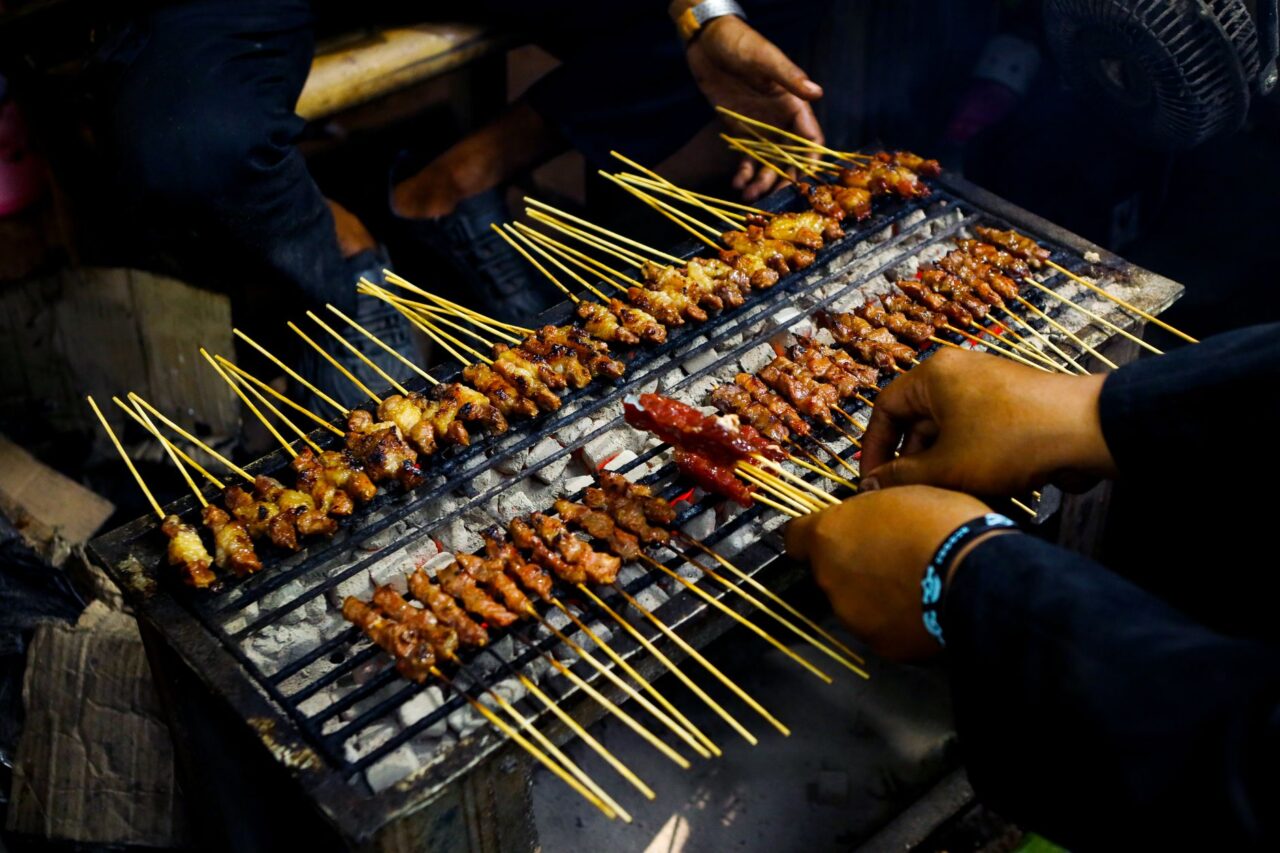
Satay Live Station for Events in Singapore
A staffed grilling counter that cooks chicken, beef and mutton satay to order in front of your guests, built for weddings, corporate dinners and open houses.
Published 9 October 2026 · 8 min read · Singapore Bella Entertainment
A satay live station is a manned counter at your event where chefs grill skewers of chicken, beef and mutton to order, served with ketupat, cucumber, onion and peanut sauce. It suits weddings, corporate dinners, D&D nights and open houses, usually running for 1.5 to 3 hours of continuous service. Cost depends on guest count, skewer allowance, grill type and whether halal certification is required. Most hotel ballrooms and indoor function rooms do not permit open charcoal flame, so an electric grill setup is often the only option indoors. Confirm this with your venue before booking. For a bigger hawker corner, many hosts also book a live prata station.
- What a satay live station actually includes
- Which events it suits
- Formats and serving durations
- Space, power and fire safety requirements
- Charcoal vs electric: what you can use indoors
- Guest sizing guide
- What drives the price
- How booking works
- Frequently asked questions
What a satay live station actually includes
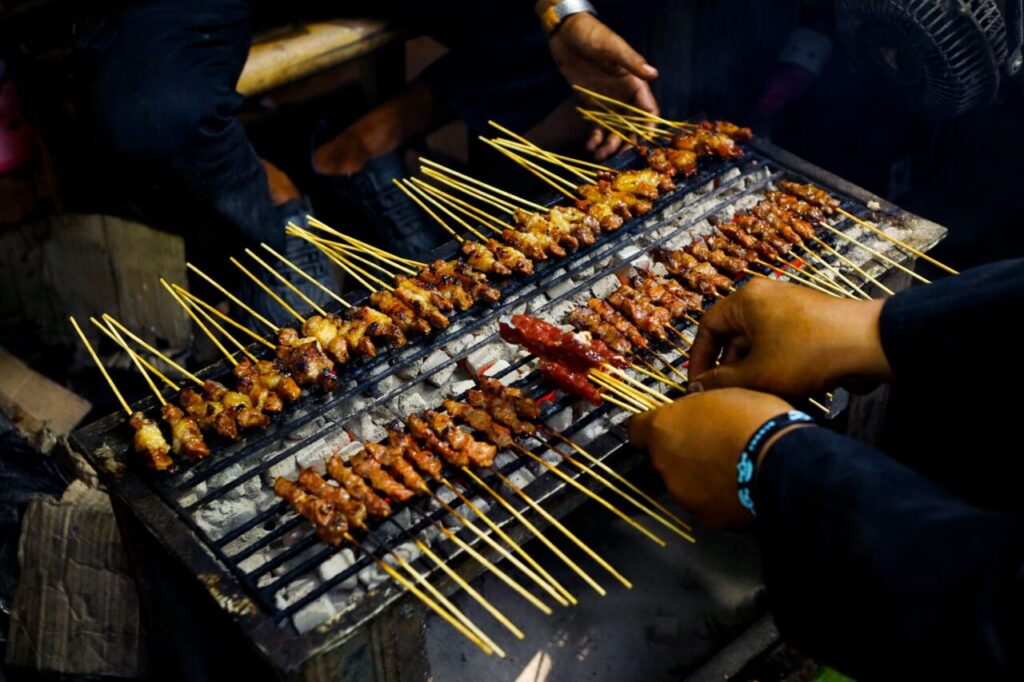
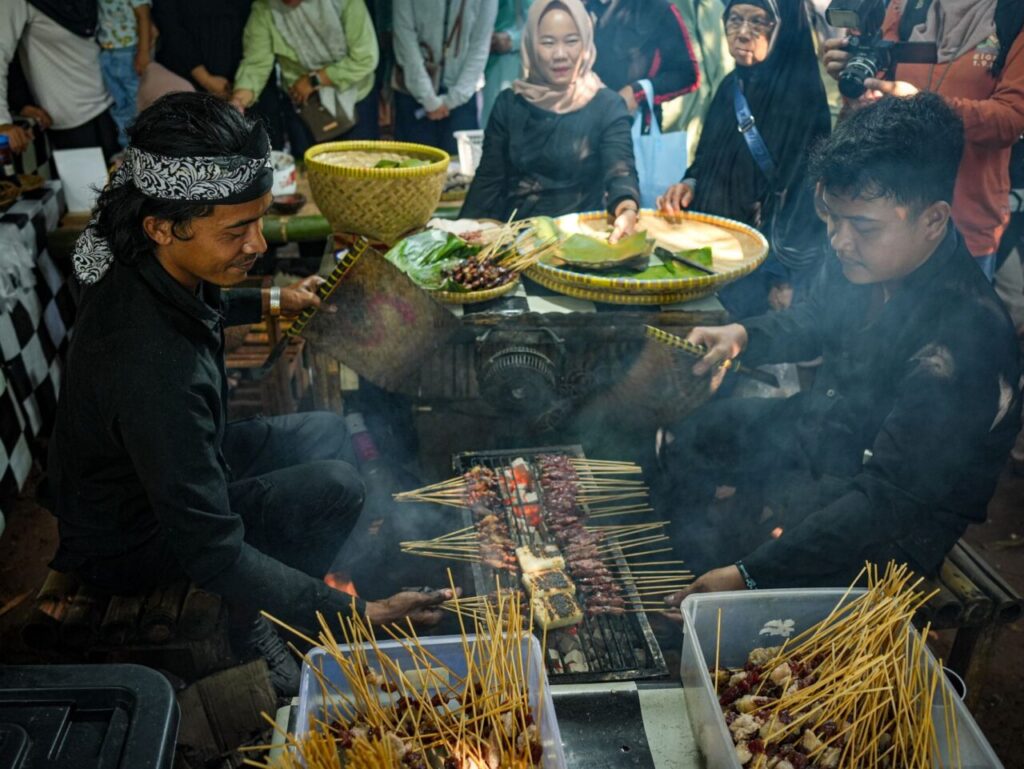
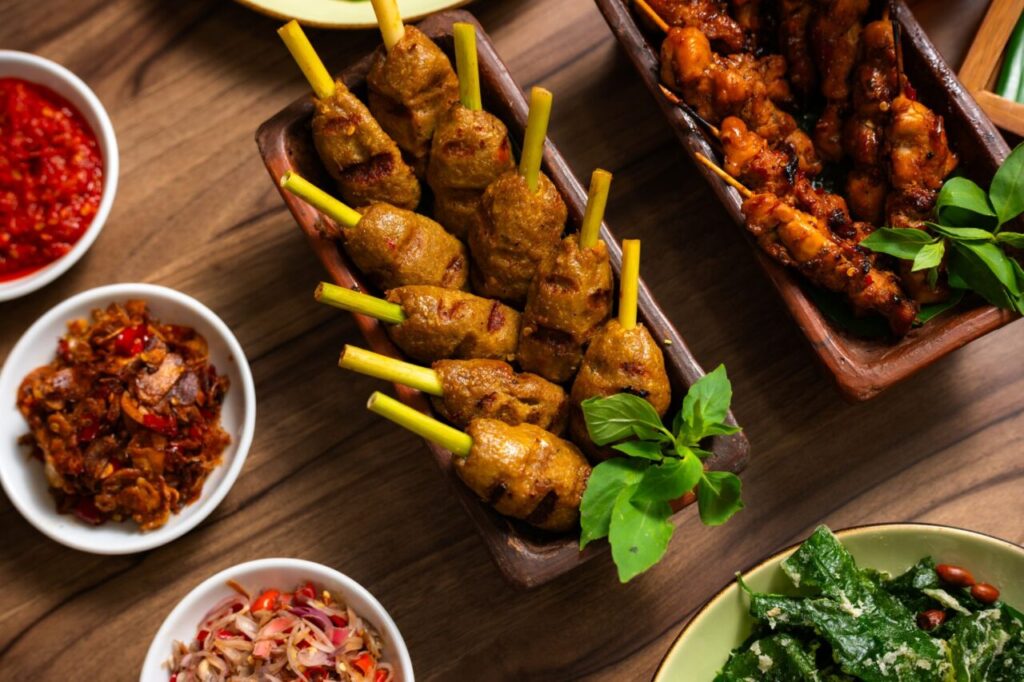
A satay live station is not a buffet tray sitting under a heat lamp. It is a grill counter with a chef or two working it throughout the event, cooking skewers to order so guests get them hot off the fire rather than pre-cooked and reheated. The standard setup includes the grill or hotplate, skewers of chicken, beef and mutton (sometimes with a prawn option), ketupat or compressed rice cakes, cucumber and onion garnish, and a peanut sauce that most vendors make fresh rather than bring in a tub of.
A satay live station in Singapore is usually booked as one of several live stations at an event, sitting alongside a laksa station, a rojak counter or a dessert station, rather than as the only food on offer. At a wedding or corporate dinner it often replaces or supplements a set course, which is why it is booked through the caterer or the entertainment agency handling the event's live stations and performers together, rather than through a satay stall direct.
2. Where it fitsWhich events suit a satay live station
It works best at events with a casual or buffet-style format where guests are moving around rather than seated for a plated meal. Weddings with a cocktail segment, corporate D&D dinners, company anniversaries, Hari Raya or National Day open houses, and condo or club function room parties are the common bookings. It is less suited to a strictly seated banquet with a fixed multi-course menu, because the grill counter needs guests to queue and move, which does not fit a formal seated service.
A lot of clients pair a satay station with a cultural performance to give the segment more of an occasion feel, for example a short dance set from our bhangra dancers and dhol players before the grill opens, or a cultural dance act during the cocktail hour while the station is running. If you are planning the whole evening rather than just the food, our event type guides break down what works for each kind of event.
3. TimingFormats and serving durations
Most bookings run the station for 1.5 to 3 hours of continuous grilling, timed to a cocktail hour, a reception window or a dinner break. Some clients book a shorter 45 minute to 1 hour "flash" session for a smaller gathering or a launch event where the satay is one of several bites rather than the main food. For a full evening wedding or dinner, 2 to 3 hours is the common length so the grill is still going when late arrivals come through.
The duration you book drives staffing and skewer allowance more than anything else, so settle this before you ask for a quote. A 1.5 hour station for 60 guests needs far less grill capacity than a 3 hour station for the same headcount, because guests return for seconds over a longer window.
4. LogisticsSpace, power and fire safety requirements
A single counter typically needs around 2 to 3 metres of frontage plus space behind for the chef to work, prep ingredients and keep a fire extinguisher within reach. Electric grill setups need a dedicated power point, usually a 13A or 15A socket depending on the equipment, and the vendor will tell you the load once they confirm the grill model. Charcoal setups need no power but do need ventilation and, critically, permission.
This is the part most people miss. Open flame charcoal grilling indoors is restricted at almost every hotel ballroom, function room and many condo clubhouses in Singapore because of fire safety rules enforced by the venue and, in many cases, Singapore Civil Defence Force guidelines on naked flame in enclosed spaces. If your venue is indoors, assume charcoal is not allowed until the venue confirms otherwise in writing. Outdoor gardens, open-air pavilions and tented lawns are usually fine for charcoal, subject to the venue's own policy.
5. Grill typeCharcoal vs electric satay grill: which can you use indoors
Electric or smokeless grills are the default for any indoor venue because they produce no open flame and far less smoke, which keeps you within fire codes and avoids setting off ceiling smoke detectors in a ballroom. Charcoal gives a slightly more traditional smoky flavour and look, and some clients want it specifically for that reason, but it is really only an option outdoors or in a venue with its own designated grilling area.
Ask your venue coordinator two questions before you book: whether open flame cooking is permitted anywhere on the premises, and whether external food vendors are allowed to operate alongside the venue's own catering team. Some hotels run an exclusive in-house catering policy and will only allow an external satay station if it is billed through their own F&B department or subject to a corkage style surcharge. This single check can change your entire quote, so do it before you lock in a vendor.
6. SizingGuest sizing guide
The table below is a general guide, not a fixed rule. Actual staffing depends on how fast your chosen vendor's chefs can grill, how many skewers you allocate per guest, and how long the station runs. Confirm the exact setup with your vendor once you know your guest count and duration.
| Guest count | Typical chefs | Grill setup | Common serving duration |
|---|---|---|---|
| Up to 50 | 1 chef | 1 electric or charcoal grill | 1 to 1.5 hours |
| 50 to 150 | 2 chefs | 1 to 2 grills, electric indoors | 1.5 to 2 hours |
| 150 to 300 | 2 to 3 chefs | 2 or more grills, sometimes two stations | 2 to 3 hours |
| 300 plus | 3 or more chefs | Multiple stations, confirm with vendor | 2 to 3 hours, rotating service |
What drives the price
There is no fixed market rate for a satay live station because the variables move the cost around too much to quote a single figure that would mean anything. What actually changes the number on your invoice is the guest count and skewer allowance per head, the duration booked, the number of chefs and whether a dedicated attendant runs the counter, the grill type and whether rental equipment needs to be delivered and set up, the meat mix (mutton and prawn usually cost more than chicken and beef), and whether halal certification is required.
Halal certification matters for most Singapore corporate events given the mix of guests, and it is worth confirming your vendor is certified by MUIS (Majlis Ugama Islam Singapura) rather than simply using halal ingredients without the formal certificate, since some venues and corporate clients will ask for the certificate itself. Delivery, setup, teardown and any venue surcharge for external catering are usually line items on top of the food and staffing cost, not folded in automatically, so ask for them to be itemised in the quote.
The most expensive mistake
Booking a charcoal satay station for an indoor venue without checking the venue's fire safety policy first. If the venue rejects open flame on the day, you either pay for an emergency electric grill swap at short notice or lose the station entirely. Confirm grill type with the venue in writing before you pay a deposit to any vendor.
How booking works
Booking runs in a short sequence rather than a single transaction. First confirm your venue's policy on open flame and external food vendors. Then give us your guest count, event date, duration and venue type so we can recommend a grill setup that will actually be allowed on site. We then quote based on headcount, skewer allowance, meat mix and whether you want halal certification documented. Once confirmed, we handle delivery, setup, staffing and teardown so you are not managing the grill counter yourself on the day.
If you are booking the satay station as part of a larger lineup, for instance alongside a dance performance or a themed entertainment segment, it is worth asking us to coordinate timing across both so the grill opens right as the performance wraps rather than competing for guest attention. Browse our full range of act types if you want to build out the rest of the evening, or see our dancers in Singapore page if a performance slot alongside the food station is on your list.
Frequently asked questions
How much does a satay live station cost in Singapore?
There is no single market rate because cost depends on guest count, skewer allowance per head, duration, number of chefs, grill type and whether halal certification is required. Chicken and beef skewers typically cost less than mutton or prawn. Ask for a quote based on your actual headcount, event date and venue type rather than relying on a generic figure.
Can satay be grilled indoors at a hotel or function room?
Usually only with an electric or smokeless grill, not open charcoal flame. Most hotel ballrooms and indoor function rooms restrict naked flame cooking for fire safety reasons, sometimes enforced through Singapore Civil Defence Force guidelines on enclosed spaces. Always confirm the venue's grilling policy before booking a vendor, since charcoal setups are generally limited to outdoor gardens or tented areas.
Is halal certification needed for a satay station?
It depends on your guest list and the venue's requirements, but most corporate events in Singapore ask for it given the mix of attendees. Confirm your vendor holds certification from MUIS, the Majlis Ugama Islam Singapura, rather than simply using halal ingredients informally, since some venues and clients will ask to see the actual certificate before the event.
How many skewers per guest should I budget?
This varies by event format and duration, and your vendor should confirm the number once they know your guest count and how long the station runs. A longer station with guests returning for seconds needs a higher allowance than a short 45 minute cocktail segment. Ask your vendor to state the skewer allowance per head in writing as part of the quote.
How far in advance should I book a satay live station?
Book as early as you can once your venue and date are fixed, since grill equipment, chef availability and halal certified suppliers can be limited around peak wedding and corporate dinner seasons. Confirming the venue's fire safety and external catering policy early also avoids a last minute scramble to swap a charcoal setup for an electric one.
Can a satay station be combined with other live stations or entertainment?
Yes, it is commonly booked alongside other food stations such as laksa or rojak counters, and alongside performance acts like dance sets or cultural performances during the same cocktail or reception window. Coordinating timing between the food station and any entertainment segment usually needs to be planned together so neither competes for guest attention at the same moment.
Do you provide a satay station for small home parties?
Smaller setups for private gatherings are possible, but space, power access and neighbourhood fire safety rules for open flame grilling need to be checked first, especially in condos and landed properties with shared common areas. A single chef with one grill and a reduced skewer allowance is the usual format for a smaller private booking.
What is included in a standard satay live station booking?
A standard booking includes the grill or hotplate, chef staffing for the booked duration, skewers of chicken and beef at minimum, ketupat or compressed rice cakes, cucumber and onion garnish, and freshly made peanut sauce. Delivery, setup, teardown and any additional meat options like mutton or prawn are usually quoted separately rather than bundled by default.
Planning a live station for your next event?
Tell us your guest count, venue and date and we will put together a setup that actually fits what your venue allows.
Get a Free Quote